

Top 10 Reasons Your Leads Are Not Converting into Customers—and How to Fix Them
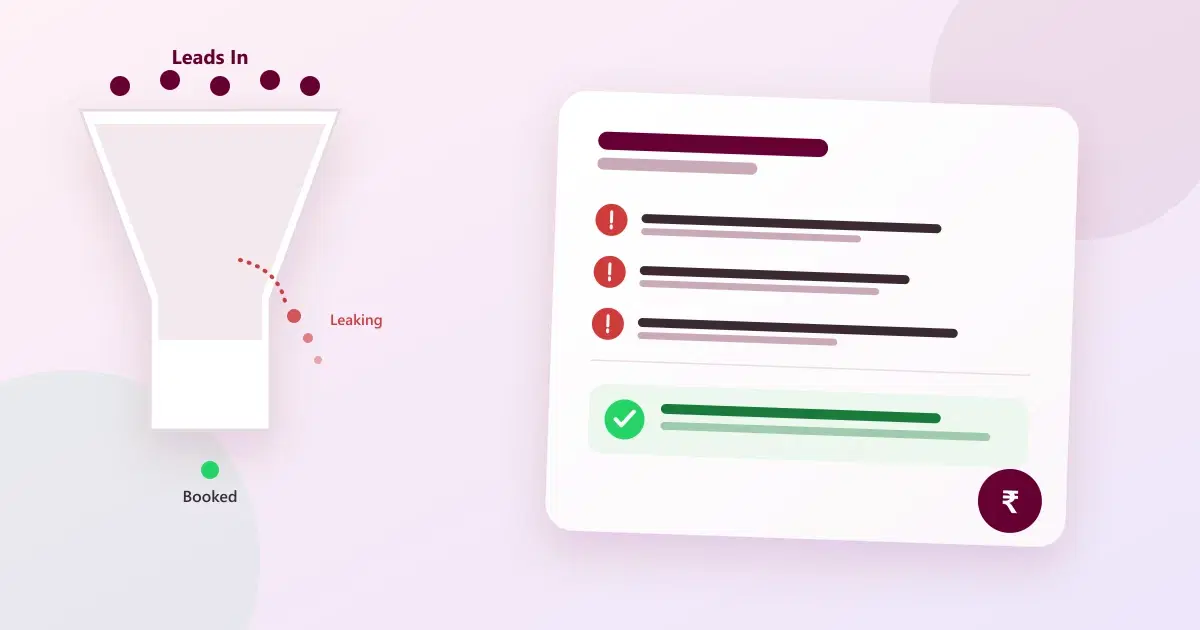
Leads coming in but not converting? Here are the top 10 reasons — slow response time, scattered channels, missed follow-ups, and more — with the specific fix for each one.
Ads are running, WhatsApp is buzzing, Instagram DMs are coming in — and the leads keep arriving. But at the end of the month, the number of new customers doesn't match the number of new leads, and it's not obvious why. In almost every case, the leads themselves aren't the problem. What happens after someone messages in is.
Why Leads Stall Before Becoming Customers
A lead converting into a customer isn't one event — it's a sequence: first contact, a fast reply, a clear next step, a booking, and a reminder that gets them to actually show up. If any single link in that chain is weak, the lead doesn't disappear loudly. It just goes quiet. Below are the ten most common places that sequence breaks, and the specific fix for each.
Top 10 Reasons Your Leads Aren't Converting — and How to Fix Each One
1. Response Time Is Too Slow
A lead who messages in is paying attention right now. If the reply comes an hour later — or the next day — that attention has usually moved on to a competitor, or simply moved on.
Fix it: Send an instant automated acknowledgment the moment someone messages in, even before a staff member replies personally, so the conversation stays alive instead of sitting unread.
2. Leads Are Scattered Across Channels
A single business might get leads through WhatsApp, Instagram DMs, phone calls, and walk-ins — often with no single place that shows all of them together. When a lead who messaged on Instagram calls in later, staff have no record of the earlier conversation.
Fix it: Use an omnichannel inbox that brings WhatsApp, Instagram, email, and calls into one view, so any staff member can see a lead's full history regardless of channel.
3. No Structured Follow-Up
Most leads don't book on the first message — they ask a question, say they'll think about it, or go quiet mid-conversation. Without a system that flags who needs a follow-up and when, that second message often never gets sent.
Fix it: Set automated follow-up reminders that don't rely on memory — a nudge to the lead, or a flag to staff, after a conversation has gone quiet for a set period.
4. No Visibility Into Lead Stage
Not every lead is at the same point — some are brand new, some are discussing price, some have booked but not shown up yet. Treating all of them the same way spreads effort evenly instead of where it's actually needed.
Fix it: Track leads through a simple pipeline — new, in conversation, booked, repeat customer — using a dedicated lead management system built for it.
5. Cold Leads Never Get a Second Chance
A lead that didn't convert this month isn't necessarily gone for good — but without a system for re-engaging people who went quiet, they simply stay lost.
Fix it: Run periodic re-engagement campaigns — an offer, reminder, or check-in — targeted specifically at leads who went cold, instead of writing them off permanently.
6. Leads Aren't Qualified Before Follow-Up
Treating a casual enquiry the same as a serious, ready-to-book lead wastes follow-up effort on the wrong people while genuinely warm leads wait longer than they should.
Fix it: Ask one or two quick qualifying questions early — timing, budget, or specific need — so follow-up effort goes to the leads most likely to convert first.
7. Responses Feel Generic and Impersonal
A copy-pasted reply that ignores what the lead actually asked reads as automated in the worst way.
Fix it: Reference the lead's specific question, service, or timing in the reply — even a templated message feels personal when it directly answers what was asked.
8. The Process Doesn't Scale Past a Few Leads a Day
A manual process — checking multiple apps, remembering who to follow up with, writing each message individually — works fine at low volume and breaks down exactly when marketing starts working.
Fix it: Move repetitive steps (acknowledgments, reminders, follow-ups) to automation, so lead volume can grow without the process breaking down.
9. No Clear Next Step or Call-to-Action
A conversation that ends with "let us know if you're interested" puts the effort back on the lead.
Fix it: End every conversation with a specific next step — a time slot, a booking link, or a price — rather than an open-ended invitation to reach out later.
10. No Reminder Before the Appointment
Even a lead who books can still be lost to a no-show. Without a reminder shortly before the scheduled time, a meaningful share of booked leads simply forget.
Fix it: Send an automated reminder a day before and again a few hours before the appointment, so a booking doesn't quietly turn into a no-show.
How CRM and WhatsApp Automation Fix All of This at Once
Individually, each fix above is achievable with effort and discipline. Together, they're difficult to sustain manually — which is why the leak usually happens quietly across several of these at once, not loudly in just one place. A combined CRM and WhatsApp automation platform closes the gap directly:
- WhatsApp automation sends instant acknowledgments and reminders from the number customers already have saved, including WhatsApp Coexistence so staff can keep using the WhatsApp Business App on their phone at the same time
- An omnichannel inbox brings WhatsApp, Instagram, email, and calls into one view
- A lead pipeline shows exactly who's new, who's booked, and who's due for a re-engagement message
- Automated follow-ups and appointment reminders replace the steps that previously depended on someone remembering
Cleomitra combines these into one platform starting from ₹999 per month, so the fixes above don't depend on manual discipline to hold up as lead volume grows.
Conclusion
Leads not converting is rarely a lead-quality problem — it's usually one or more of the ten leaks above hiding in plain sight. Fixing response time, channel visibility, follow-up, qualification, and reminders closes most of the gap between "leads are coming in" and "customers are actually booking," without needing to spend more on ads to compensate.
Frequently Asked Questions
Why are my leads not converting into customers?
The most common reasons are slow response times, leads scattered across WhatsApp, Instagram, and calls with no single view, no structured follow-up for leads who go quiet, no visibility into which stage each lead is at, and no re-engagement process for leads who went cold.
What is a good lead conversion process?
A good lead conversion process includes an instant acknowledgment, quick qualification, a clear next step (a time, price, or booking link), scheduled follow-up if the lead goes quiet, a confirmation and reminder before the appointment, and post-visit re-engagement to encourage repeat business.
How fast should a business respond to a new lead?
As close to instant as possible. A lead who messages in is paying attention at that moment, and an automated acknowledgment the second they message — even before a staff member replies personally — keeps the conversation alive instead of going unread.
What is the biggest reason leads fail to convert?
Slow response time is consistently one of the most common and most fixable reasons a warm lead goes cold, since attention moves on quickly once a lead has messaged in and not received a timely reply.
Can old, cold leads still be converted?
Often, yes. A lead who didn't book this month isn't necessarily gone — periodic re-engagement campaigns (an offer, reminder, or check-in) sent to leads who went quiet can recover a meaningful share of an otherwise-lost list.
How does CRM software improve lead conversion?
CRM software improves lead conversion by tracking which stage each lead is at (new, in conversation, booked, repeat), centralising conversations from multiple channels into one view, and prompting follow-up for leads who haven't responded, instead of relying on staff to track this manually.
How does WhatsApp automation help convert more leads?
WhatsApp automation sends instant acknowledgments, reminders, and follow-ups from the number a business already uses, including WhatsApp Coexistence so staff can keep using the WhatsApp Business App on their phone while automated messages also go out from the same number.
How much does a combined CRM and WhatsApp automation platform cost in India?
Plans typically start from around ₹999 per month for an India-built platform combining CRM and native WhatsApp automation, such as Cleomitra.
